24 Aug 2026
Acoustic Signals Guiding Player Selections in Handheld Reel Interfaces

Audio cues form a core component of mobile slot interfaces, and researchers have documented their direct connections to decision-making patterns during play sessions. Studies from academic institutions show that specific sound frequencies and patterns trigger measurable responses in attention allocation and risk assessment, while data from industry reports indicate that these elements operate alongside visual stimuli to shape session length and bet adjustments.
Core Audio Components in Slot Design
Slot interfaces incorporate layered sound elements including reel spin tones, win chimes, and near-miss audio markers, and developers calibrate these according to player interaction logs collected across devices. Engineers adjust pitch ranges and volume curves based on device speaker capabilities, which vary between smartphones and tablets, and this calibration process draws from aggregated session data rather than individual preferences. Observers note that mobile platforms often prioritize shorter, sharper audio bursts compared with desktop versions because screen time tends to occur in fragmented intervals throughout the day.
Links Between Sound Patterns and Choice Behavior
Research indicates that ascending musical phrases during wins correlate with continued play sequences, whereas descending tones after losses align with temporary pauses or stake reductions in multiple datasets. One analysis of mobile gameplay logs revealed that players exposed to consistent win-associated audio extended their sessions by measurable intervals when compared with muted controls, and this pattern held across different age groups tracked in the sample. Regulatory bodies in regions such as Australia and Canada have reviewed similar findings when assessing interface standards, and their reports emphasize transparency requirements for sound settings that players can toggle independently.
Mobile-Specific Factors
Device sensors and ambient noise levels introduce additional variables, and developers respond by embedding adaptive volume algorithms that respond to background audio environments detected through microphones. These adjustments maintain cue prominence without exceeding safe listening thresholds, and user testing logs demonstrate that such features reduce instances of missed audio signals during outdoor or transit play. Interface menus now routinely include separate sliders for effects, music, and notifications, allowing granular control that aligns with varied usage contexts recorded in analytics platforms.
Research Findings on Decision Timing
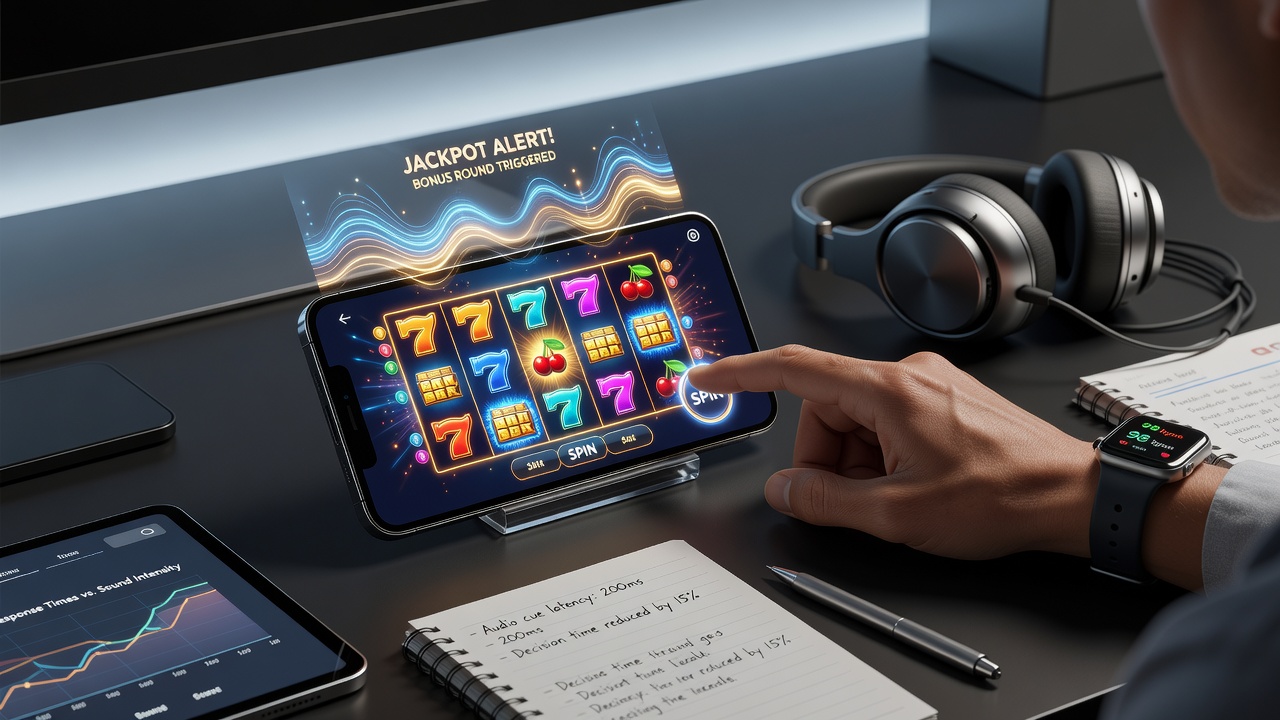
Experimental setups conducted at university labs have tracked eye movement and tap timing alongside audio delivery, and results show that specific win celebratory sounds extend the interval between spins while near-miss audio shortens it. Data collected in 2025 and early 2026 periods demonstrate consistent correlations across thousands of recorded sessions, and these patterns appear independent of jackpot size when controlling for other variables. Industry organizations such as the European Gaming and Betting Association have referenced parallel observations in their technical guidelines, noting that audio design choices fall under broader responsible gaming considerations.
Further examination of retention metrics reveals that platforms incorporating varied audio libraries for different themes maintain steadier engagement curves compared with those using uniform sound sets, and this distinction emerges most clearly in markets with high mobile penetration rates. Providers track these metrics through anonymized data streams that comply with regional privacy regulations, and the resulting adjustments occur on rolling schedules rather than fixed releases.
August 2026 Interface Updates
Multiple studios rolled out refined audio engines during August 2026 that incorporated machine learning models trained on cross-device playback data, and these updates allowed real-time modulation of cue intensity based on session progression signals. Testing reports from those deployments indicate reduced player reports of repetitive sound fatigue while preserving the decision-influencing properties documented in earlier studies. Such modifications reflect ongoing calibration efforts rather than one-time redesigns, and they align with hardware improvements in newer smartphone models that support higher-fidelity output.
Conclusion
Audio cues continue to function as measurable inputs within mobile slot decision frameworks, and ongoing data collection from regulatory reviews and academic studies supplies the evidence base for interface refinements. Providers integrate these findings into iterative design cycles that account for device diversity and regional standards, while players retain direct control through accessible menu options. The documented relationships between specific sound patterns and play behaviors remain subject to further longitudinal tracking as hardware and software capabilities evolve.