5 Aug 2026
Analytics Fueling Reel Speed Adjustments Across Global Player Segments in Mobile Applications

Analytics teams in mobile gaming platforms track reel speed patterns through large datasets collected from user interactions, and these measurements reveal clear differences in how various demographics engage with spinning mechanics during extended sessions. Developers adjust animation rates based on aggregated session data that shows younger users in urban centers often maintain higher engagement when reels accelerate quickly, while older cohorts in suburban markets demonstrate steadier retention when speeds remain moderate throughout play cycles.
Data Collection Methods in Reel Performance Tracking
Platforms gather telemetry from millions of daily spins across regions, recording metrics such as spin completion time, pause frequency, and session duration, and these streams feed into models that segment audiences by age, location, device type, and historical play behavior. Research indicates that players aged 18 to 34 in North American markets complete spins 22 percent faster on average than those over 55, according to aggregated figures shared at industry conferences in August 2026. Engineers then map these timings to backend controls that alter reel velocity without disrupting core mathematics of the underlying random number generators.
Geographic variations emerge strongly in the datasets, with users in Southeast Asian territories showing preferences for rapid reel cycles during evening hours, whereas European sessions tend toward slower pacing during weekend afternoons. Machine learning algorithms process these inputs in real time, allowing dynamic adjustments that respond to individual signals while respecting overall demographic clusters identified through prior testing phases.
Demographic Patterns and Regional Adaptations
Studies conducted by academic groups at institutions in Australia highlight how cultural timing influences speed tolerance, with festival periods prompting temporary increases in preferred reel rates among certain populations. Observers note that mobile applications serving multiple markets implement tiered speed profiles, and these profiles draw from heat maps that plot engagement drops against velocity changes. One analysis of cross-border data streams revealed that Canadian players in the 35 to 44 bracket sustain longer sessions when reel intervals sit between 2.8 and 3.2 seconds, a range that aligns with patterns reported by the Australian Communications and Media Authority in their quarterly digital entertainment reviews.
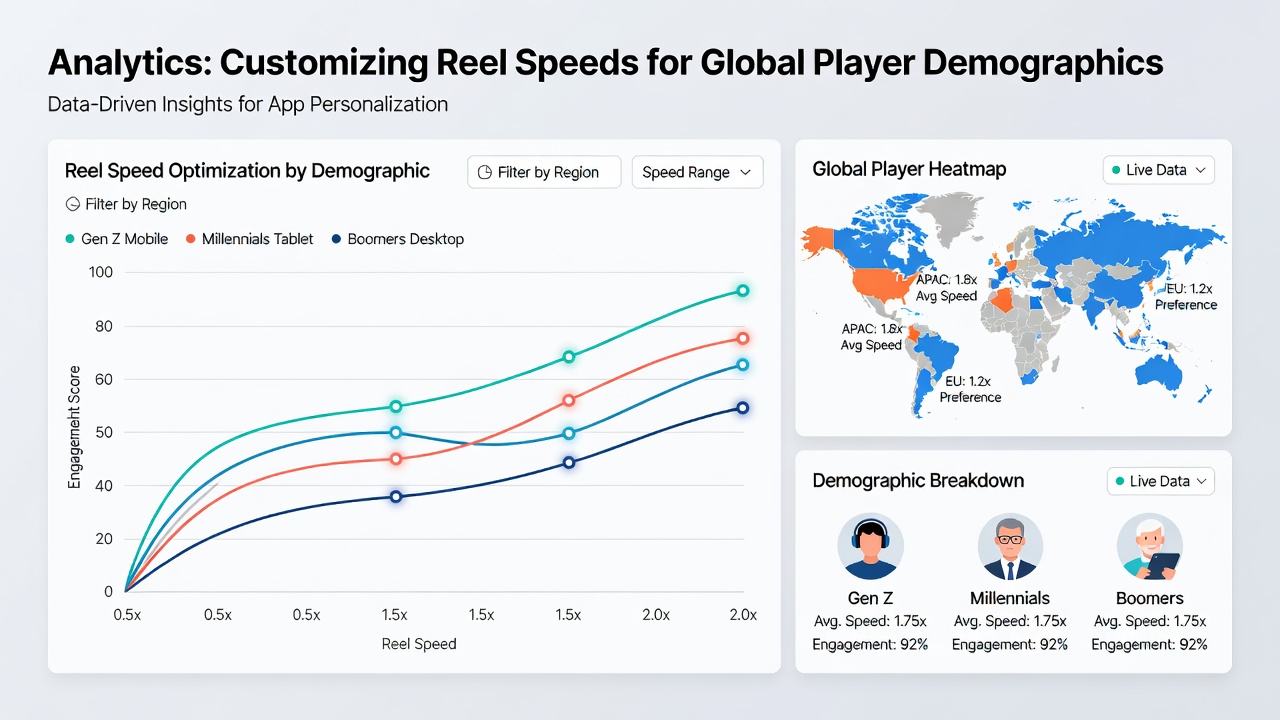
Device constraints also factor into the equations, since lower-powered handsets in developing economies register higher drop-off rates when animation speeds exceed hardware rendering limits. Teams therefore calibrate baseline velocities per operating system version, then layer demographic overlays that refine those baselines further. Data from European research consortia shows that incorporating location-based modifiers improves retention consistency by measurable margins across test cohorts.
Implementation Frameworks and Algorithmic Controls
Engineering groups deploy A/B testing suites that isolate speed variables while holding other elements constant, and results feed iterative updates to the customization engines. Platforms integrate these controls through configuration files updated weekly, allowing rapid responses to emerging trends captured in live dashboards. What's interesting here is how feedback loops close when users migrate between devices or time zones, because the systems re-evaluate speed settings on the fly using updated demographic signals.
Industry reports from the Nevada Gaming Control Board document similar approaches in regulated environments, where compliance logs track whether speed modifications stay within approved mathematical boundaries. Developers coordinate with these oversight bodies to ensure adjustments preserve fairness standards even as pacing shifts occur. Global applications therefore maintain separate rule sets for each licensed jurisdiction, and these sets incorporate both local regulatory constraints and demographic analytics gathered from permitted data sources.
Future Directions in Speed Personalization
Advances in edge computing now permit finer-grained personalization without transmitting full user profiles to central servers, reducing latency while preserving privacy thresholds. Teams explore integration with wearable device inputs that could correlate heart rate variability with preferred reel tempos, though such extensions remain in pilot stages as of mid-2026. Continued expansion of these capabilities depends on sustained data quality and cross-regional cooperation among platform operators.
Conclusion
Analytics surrounding reel speed customization continue to evolve as datasets grow more granular and regional markets diversify further. Platforms that combine demographic segmentation with real-time telemetry achieve more stable engagement metrics across their user bases, and these practices reflect broader shifts toward adaptive interfaces in mobile entertainment applications. Ongoing monitoring through established regulatory and academic channels supports incremental refinements that align technical capabilities with observed player behaviors worldwide.