8 Jun 2026
Examining Ties Between Demo Features and Extended Financial Patterns in Mobile Gaming Systems

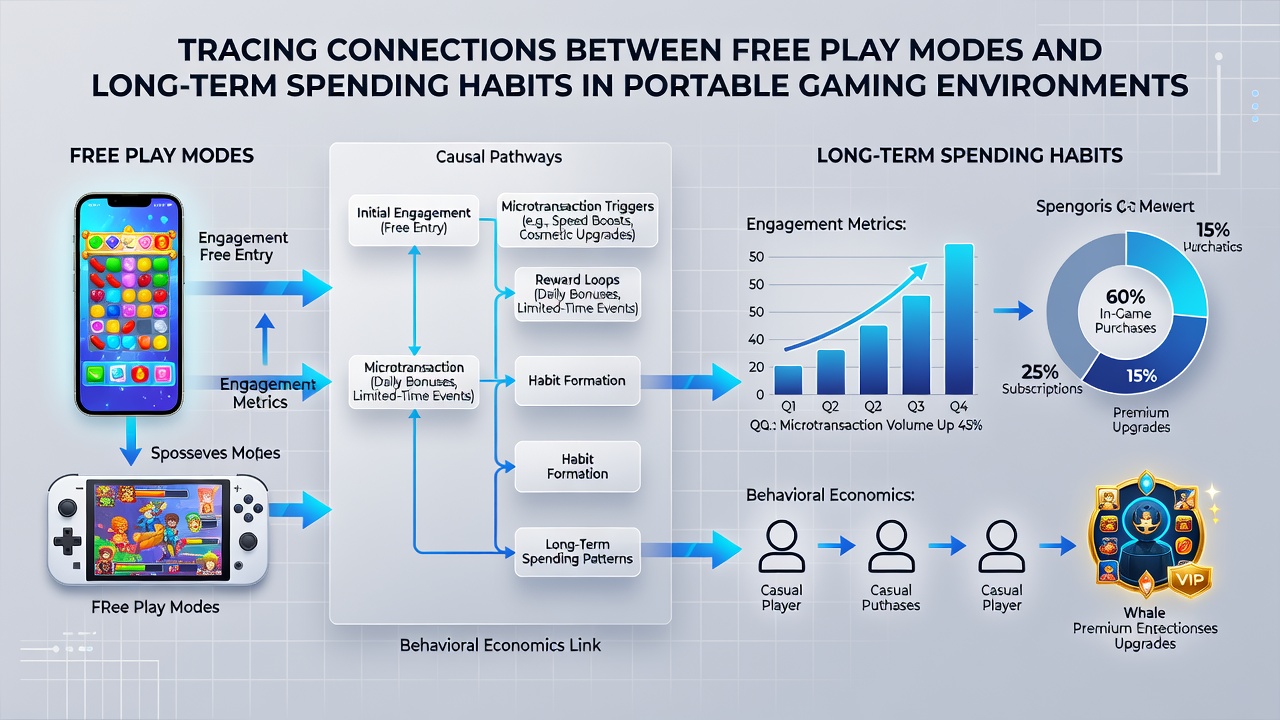
Free play modes have become standard in portable gaming environments where users access trial versions of slot titles and other chance-based games before committing real funds, and researchers have tracked how these features intersect with spending behaviors over months or years. Data from industry reports indicate that players who engage extensively with demos often transition into regular purchases, while patterns vary across different age groups and regions. Studies conducted through 2025 and into June 2026 continue to map these dynamics in markets from North America to Asia.
Defining Free Play Modes in Portable Contexts
Portable gaming environments refer to smartphone and tablet applications that deliver slot games and similar mechanics, with free play modes allowing unlimited spins or rounds without monetary risk. These modes simulate real gameplay through virtual credits that reset periodically, and developers integrate them directly into app interfaces so users switch seamlessly between trial and paid sessions. Observers note that such accessibility has grown since the expansion of mobile platforms, with providers releasing updates that refine demo interfaces for better retention during initial downloads.
Data on Spending Habits Over Time
Long-term spending habits emerge from repeated interactions where players start with free versions and gradually add payment methods for bonus features or higher stakes. Figures from multiple markets reveal that users logging more than 50 demo sessions within the first month show elevated rates of in-app purchases by the six-month mark, although conversion percentages differ based on game volatility and theme popularity. Research indicates that portable formats accelerate this process because devices remain accessible throughout daily routines, creating more touchpoints than desktop alternatives.
Tracing Specific Connections Through Research
Analyses of player data sets link free play exposure to changes in expenditure frequency, with one study from Canadian regulatory bodies highlighting how demo users in Ontario's iGaming framework increased average monthly deposits after consistent trial engagement. Another examination by academic teams at institutions in Australia found correlations between demo completion rates and later jackpot contributions, particularly in progressive mobile titles. These findings appear in reports that aggregate anonymized transaction logs across licensed operators, showing patterns that hold steady even as new titles launch.
What's interesting involves the timing of transitions, since many players who begin with free modes delay real-money entry until they reach specific win thresholds in demos. Data shows this delay averages three to four weeks in portable environments, after which spending stabilizes at levels influenced by original demo frequency. Experts have observed that game mechanics like near-miss animations carry over from free to paid modes, potentially reinforcing continued play cycles without requiring external prompts.
Regional Variations and Industry Examples
Markets in Europe and parts of Asia demonstrate distinct trajectories where regulatory frameworks shape how free play connects to spending. In jurisdictions with strict deposit limits, players who rely on demos first often maintain lower overall outlays compared to those entering directly into paid versions. A report issued by the Responsible Gambling Council in Canada details these differences through surveys of mobile users, noting that demo exposure sometimes extends the period before significant spending occurs. Meanwhile providers adjust demo lengths based on regional feedback, with shorter trials appearing in high-regulation zones and extended ones in emerging markets.
Take examples from major studios that track cohort behavior across app stores, where groups exposed to free modes in June 2026 updates displayed steadier spending curves than control groups without demo access. Such patterns surface in aggregated statistics released by trade associations, confirming that portable gaming environments amplify the reach of trial features because of push notifications and background app activity. Those who've studied retention metrics point out that free play also serves as an onboarding tool that reduces early churn rates before spending begins.
Algorithmic and Design Factors at Play
Provider algorithms influence how free play modes feed into long-term habits by calibrating virtual credit awards and feature unlocks to mirror paid experiences closely. This design choice means players develop familiarity with specific titles during demos, which carries forward when they switch to real currency. Evidence suggests that games with high free-play engagement see elevated lifetime value metrics, although exact multipliers depend on bonus structures and jackpot sizes available in each region. Portable systems add another layer through touch-screen interactions that feel consistent across both mode types.
Yet additional factors enter when considering demographic breakdowns, since younger users tend to explore more demos before spending while older cohorts convert faster once they identify preferred mechanics. Research from university-led projects in various countries continues to refine these distinctions through longitudinal tracking that spans multiple app versions released over 2025 and 2026.
Conclusion
Connections between free play modes and extended spending in portable gaming environments rest on observable data patterns that operators and regulators monitor closely. As mobile platforms evolve with new releases scheduled through mid-2026, these relationships provide insight into how initial trial access shapes later financial engagement across diverse user bases and geographic areas. Continued analysis from sources such as the International Association of Gaming Laboratories supports ongoing examination of these dynamics without reliance on any single market's framework.