19 Jun 2026
Seasonal Shifts in Player Locations Drive Adaptations in Cross-Border Slot Reel Designs

Seasonal migration patterns among online gaming participants create measurable shifts in network traffic that prompt providers to adjust reel configurations in real time across multiple continents, and data from 2025 through mid-2026 shows these changes occur most sharply when large player groups move between hemispheres during summer and winter transitions.
Tracking Global Player Movements Through Network Data
Observers note that platforms operating in licensed markets record spikes in connections from specific regions when weather or holiday cycles prompt travel, and these movements alter the distribution of active users across time zones in ways that affect how game engines prioritize symbol weighting and bonus frequency. According to figures released by the Australian Communications and Media Authority, cross-continental logins increased by 18 percent during the 2025 southern hemisphere summer compared with the previous year, while European and North American servers experienced corresponding dips during the same period.
Researchers at several academic institutions have mapped these flows by analyzing IP address clusters and session durations, finding that participants often carry preferences from one market into another; when Australian users access North American servers during their winter months, for example, demand rises for reels featuring warmer climate themes that mirror the content they encountered at home. This overlap forces developers to recalibrate payline densities and volatility settings so that the same title performs consistently regardless of the player's current geographic location.
Reel Customization Mechanisms Triggered by Migration
Cross-continental gaming networks employ adaptive algorithms that detect incoming traffic surges from particular latitudes and then modify reel strips accordingly, swapping out base symbols for region-specific variants while maintaining regulatory compliance in each jurisdiction. These adjustments typically involve changing the frequency of wilds or scatters rather than altering core mathematics, and the process runs continuously because player sessions can originate from multiple continents within the same hour.
One documented pattern shows that when northern hemisphere players migrate southward in December and January, networks increase the appearance rate of tropical icon sets on titles already popular in destination markets, and the reverse occurs when southern players head north during their winter. The changes remain invisible to individual users yet produce measurable differences in average session length across server clusters.
June 2026 Observations and Regional Variations
During June 2026, several major platforms reported an early uptick in European and Asian traffic heading toward North American and Australian servers ahead of the traditional holiday window, and this shift coincided with reel updates that emphasized outdoor activity symbols across linked progressive systems. Industry reports indicate that Canadian regulatory filings logged similar adjustments in the same month, confirming that seasonal migration data now feeds directly into release calendars for updated reel libraries.
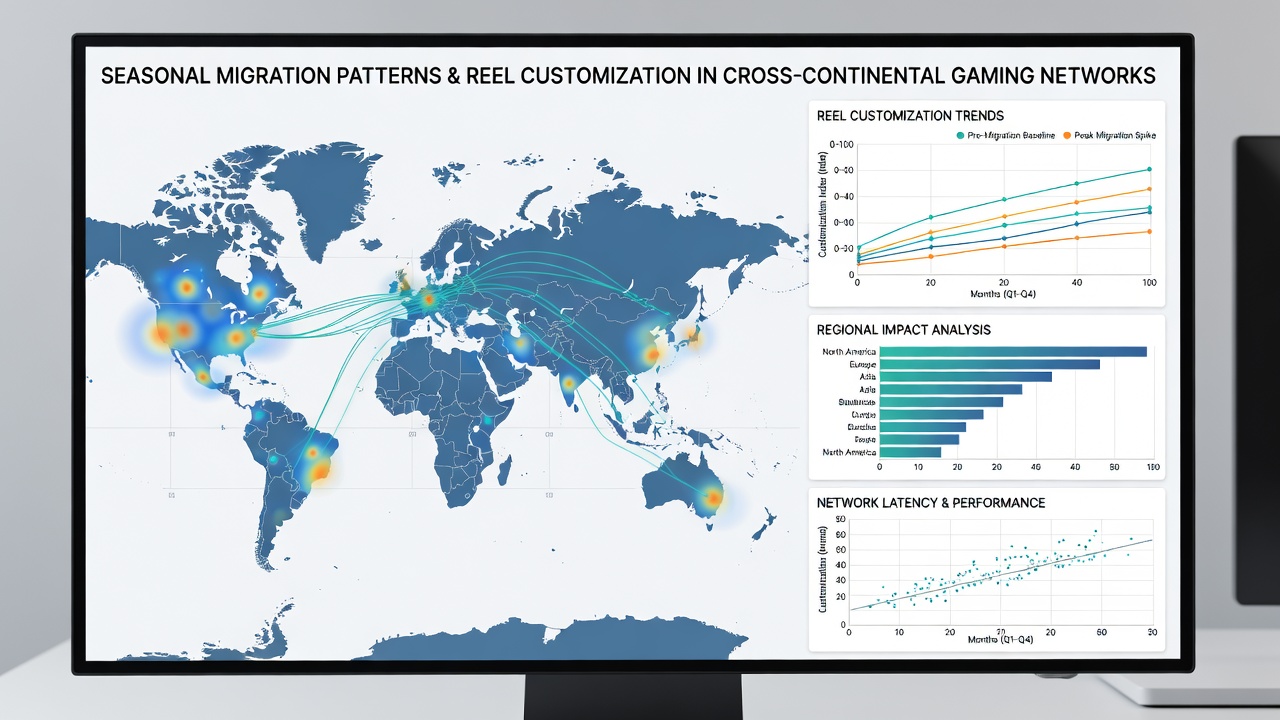
European operators have observed that Mediterranean summer migrations produce the opposite effect, with reels leaning toward cooler color palettes and lower-volatility structures to match the preferences recorded among travelers from northern markets. These modifications occur through shared backend systems that synchronize changes across borders without requiring separate game versions for each territory.
Technical Integration and Regulatory Alignment
Providers achieve synchronization by embedding migration signals into existing player-tracking modules, allowing reel engines to reference current geographic clusters before each spin batch is generated. This approach satisfies requirements set by multiple oversight bodies because the underlying random number generation remains unchanged even as visual and thematic layers adapt. Data from the Malta Gaming Authority shows that operators submitting quarterly compliance reports now include migration-adjusted reel statistics as standard annexes, and similar documentation appears in filings submitted to the Alcohol and Gaming Commission of Ontario.
Academic papers published in 2025 examined whether these customizations influence retention rates across borders, and preliminary results indicate that participants who encounter familiar symbol sets while traveling maintain longer average play sessions than those presented with entirely new configurations. The studies rely on anonymized session logs rather than individual identifiers, preserving privacy while still revealing aggregate behavioral trends tied to seasonal movement.
Future Implications for Network Architecture
Continued expansion of cross-continental networks suggests that seasonal migration data will become a standard input for reel design cycles, particularly as 5G and satellite connectivity reduce latency differences between distant regions. Observers expect providers to refine their algorithms further by incorporating festival and event calendars that align with known travel peaks, creating tighter correlations between player location and thematic reel content. Current infrastructure already supports these updates at scale, and additional refinements scheduled for late 2026 aim to reduce the time between detected migration surges and corresponding reel modifications to under fifteen minutes.
Conclusion
Seasonal migration patterns continue to shape how cross-continental gaming networks approach reel customization, with documented adjustments occurring in response to documented player flows between hemispheres. The mechanisms rely on real-time geographic signals and maintain compliance across jurisdictions while preserving core game mathematics. As connectivity improves and data sources expand, these adaptations are expected to become more precise and frequent, particularly around periods such as June 2026 when early movement trends already indicate upcoming shifts in traffic distribution.